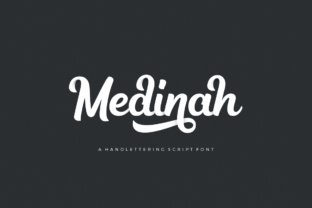
Medinah: A Bold and Versatile Script for Modern Design
Medinah is a striking script font that captures attention with its elegant yet powerful presence. Designed for versatility, it offers a unique blend of readability and visual impact, making it an excellent choice for a wide range of design projects. Whether you're working on branding, editorial layouts, or digital content, Medinah can elevate your work with its distinctive character and adaptability.
What Makes Medinah Stand Out?
At first glance, Medinah appears as a bold and dynamic script, but its true value lies in the balance it strikes between style and functionality. Unlike many script fonts that prioritize aesthetics over usability, Medinah maintains clarity even at smaller sizes, ensuring that your message remains legible across different mediums. This makes it particularly useful for designers who need to convey information effectively while maintaining a strong visual identity.
The font’s consistent stroke weight and well-proportioned letterforms contribute to its professional appearance. It avoids the overly ornate details that can sometimes make scripts difficult to read, instead offering a clean and modern look. This approach ensures that Medinah remains appropriate for both casual and formal applications.
Key Characteristics and Practical Applications
Medinah is ideal for use in headings, logos, and titles where a strong visual statement is needed. Its bold nature allows it to command attention without overwhelming the surrounding design elements. For instance, in a marketing campaign, Medinah could be used to highlight key messages or brand names, drawing the viewer’s eye and reinforcing brand recognition.
One of Medinah’s greatest strengths is its flexibility. It works well in both digital and print formats, adapting seamlessly to different screen sizes and resolutions. This makes it a reliable choice for web designers, app developers, and print professionals alike. Its open spacing and clear letterforms also make it suitable for long-form text, though it is most effective when used strategically rather than as a body font.
Additionally, Medinah supports a wide range of languages, which expands its usefulness for international projects. This feature is especially valuable for businesses targeting global audiences or for creators working on multilingual content. The font’s consistent structure ensures that it maintains its visual integrity regardless of the language being used.
Real-World Performance and Usability
In practical terms, Medinah performs well in a variety of design scenarios. When used as a headline font, it adds a sense of energy and sophistication to any layout. In editorial design, it can be paired with sans-serif fonts to create a balanced contrast that enhances readability and visual interest.
Designers have noted that Medinah integrates smoothly with other typefaces, allowing for creative combinations that maintain a cohesive aesthetic. Its versatility extends to different industries, from fashion and lifestyle branding to technology and finance. This broad applicability makes it a valuable addition to any designer’s toolkit.
However, it’s important to consider the context in which Medinah is used. While it excels in short, impactful text, it may not be the best choice for extended reading. In such cases, pairing it with a more traditional serif or sans-serif font can help maintain readability without sacrificing style.
Who Benefits Most from Medinah?
Medinah is particularly beneficial for professionals in fields that rely heavily on visual communication. Entrepreneurs and small business owners looking to establish a strong brand identity can use it to create memorable logos and marketing materials. Its boldness helps convey confidence and professionalism, which are essential for building trust with customers.
Marketers and content creators can also find value in Medinah. Whether designing social media posts, email newsletters, or promotional banners, the font’s visual appeal can help capture audience attention and drive engagement. Its ability to stand out in a crowded digital space makes it a strategic choice for those seeking to differentiate their work.
For educators and publishers, Medinah can add a touch of elegance to educational materials, presentations, and publications. Its clarity and consistency ensure that it remains accessible to a wide audience, making it a practical option for both digital and printed content.
Considerations and Limitations
While Medinah is a strong and versatile font, it is not without its limitations. As mentioned earlier, it is best suited for short text rather than lengthy paragraphs. Designers should also be mindful of how it interacts with other elements in a composition. Overuse or improper pairing can lead to a cluttered or unbalanced design.
Another consideration is the availability of the font. Depending on the platform or software being used, access to Medinah may vary. Designers should verify compatibility before incorporating it into a project to avoid technical issues during production.
Finally, while Medinah is visually appealing, it may not suit every design aesthetic. Those working on minimalist or highly functional projects might prefer a simpler typeface that aligns more closely with their overall vision. As with any design tool, the success of Medinah depends on how well it aligns with the specific needs and goals of the project.
Conclusion: Is Medinah Right for Your Project?
Medinah is a compelling choice for designers seeking a bold, versatile, and readable script font. Its combination of style and functionality makes it suitable for a wide range of applications, from branding and marketing to editorial and educational projects. However, its effectiveness ultimately depends on how it is used within the broader context of a design.
If your goal is to create a strong visual impact while maintaining clarity and professionalism, Medinah is worth considering. It offers a fresh alternative to more conventional typefaces, providing a unique voice that can enhance your work. By understanding its strengths and limitations, you can make an informed decision about whether it fits your needs and helps achieve your design objectives.